Black Chokeberry
Aronia melanocarpa
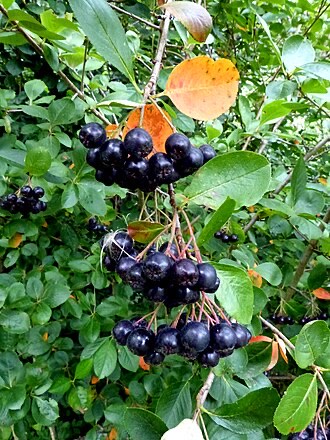
Black chokeberry earns its name honestly: the glossy black fruit is edible but so astringent raw that it dries the mouth, and it is at its best cooked into jelly or picked after a frost or two. That astringency is tannin and pectin, and the fruit is rich enough in the latter to set jam made from fruits that have none of their own. White flower clusters open in spring, and fall color is among the most dependable of any native shrub, a deep glowing red across the whole plant at once. It suckers freely into wide colonies, which suits a mass planting or a hedgerow and rules it out of a small bed unless you intend to keep cutting. It tolerates wet ground, drought, shade and poor soil in turn, one of the least demanding shrubs in the catalog. Birds leave the fruit until late winter, so it holds its display long after other berries are gone.
- Family
- Rosaceae
- Type
- shrub
- Lifespan
- perennial
- Height
- 3–6 ft
- Spacing
- 3–6 ft apart
- Light
- part shade
- Soil moisture
- moist
- Soil pH
- acidic, neutral
- Bloom
- May
- Bloom colors
- white
- Wildlife value
- butterflies, pollinators, mammals, songbirds, larval host
- Caterpillar hosts
- ~29 butterfly & moth species
- Landscape uses
- border, naturalizing, rain garden
- Native states
- AL, AR, CT, DC, DE, GA, IA, IL, IN, KY, MA, MD, ME, MI, MN, MO, MS, NC, NH, NJ, NY, OH, PA, RI, SC, TN, VA, VT, WI, WV