Prairie Gentian
Eustoma russellianum
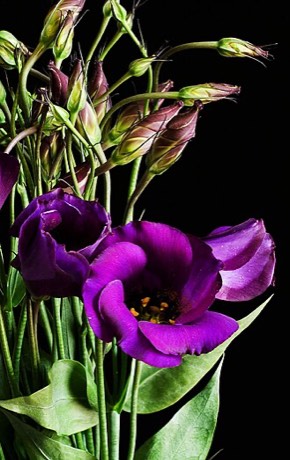
Prairie gentian is the wild ancestor of the florist's lisianthus and the resemblance is immediate: large satiny cups of purple to blue, sometimes white, over blue-green foliage with a waxy bloom. In the wild it grows in seasonally wet swales and depressions on the southern plains, coming up after the ground has been soaked and flowering through the heat of summer once the swale itself has baked hard. It is biennial or a short-lived perennial and is grown as an annual in the cut-flower trade, where the flowers last two weeks or more in a vase — exceptional for a wildflower. Seed is dust-fine and needs light to germinate, so it is surface-sown and kept damp, and the seedlings are famously slow for their first two months. Bumblebees are the main pollinator, heavy enough to work down into the deep cup. Give it full sun and a spot wet in spring and dry later, an easier condition to find than it sounds.
- Family
- Gentianaceae
- Type
- wildflower
- Lifespan
- annual
- Height
- 1–3 ft
- Spacing
- 0.5–1 ft apart
- Light
- sun
- Soil moisture
- moist
- Soil pH
- neutral, alkaline
- Bloom
- June, July, August, September
- Bloom colors
- purple, blue, white
- Wildlife value
- pollinators, butterflies
- Landscape uses
- border
- Native states
- CO, KS, LA, MT, NE, NM, OK, SD, TX, WY