Prairie Verbena
Glandularia bipinnatifida
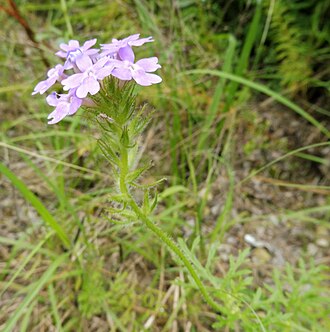
Prairie verbena runs flat along the ground on ferny, deeply cut leaves and covers itself in tight rounded clusters of small purple flowers for most of the year, pausing only for hard freeze or hard drought. Each cluster opens from the outside in, so a head shows buds at the center and spent flowers at the rim while the stem tips keep pushing new heads all season. That relentlessness makes it one of the most dependable nectar sources on the southern plains, worked by skippers, sulphurs and small native bees on days when little else is open. Stems root wherever they touch the ground, which is how one plant becomes a wide low mat in a season or two. It is short-lived but self-sows so freely that a patch effectively persists. Give it lean, sharply drained soil and it needs nothing else; give it fertility and it goes leggy and quits flowering.
- Family
- Verbenaceae
- Type
- wildflower
- Lifespan
- annual
- Height
- 0.5–1 ft
- Spacing
- 1–3 ft apart
- Light
- part shade
- Soil moisture
- dry
- Soil pH
- neutral, alkaline
- Bloom
- March, April, May, June, July, August, September, October
- Bloom colors
- purple
- Wildlife value
- songbirds, pollinators
- Landscape uses
- border, groundcover, container, erosion control, naturalizing
- Native states
- AL, AR, AZ, CA, CO, GA, KS, LA, MD, MO, MS, NE, NM, OK, SD, TN, TX, WY