Valley Lupine
Lupinus vallicola
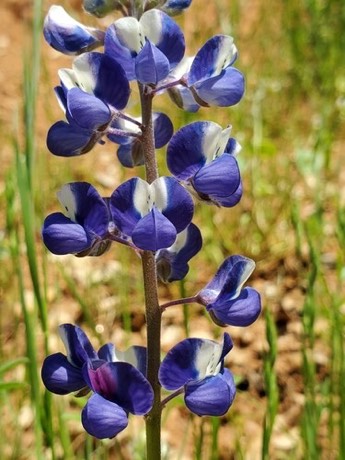
Valley lupine is a slender California annual that germinates with the winter rains and flowers from midwinter into spring, well ahead of most of the state's lupines. Its spikes are open and airy rather than dense, and the blue to purple flowers carry a pale patch on the banner petal that darkens once a flower has been visited — a signal to bees that the nectar is already gone. It fixes nitrogen through root nodules, which is how annual lupines make a living on thin foothill soils and why they leave the ground better for the grasses around them. Being annual it depends entirely on setting seed each year and on bare ground to germinate into, so it does best in meadows that are not densely thatched. Lupines are heavily used larval hosts for blues and hairstreaks. Sow it in fall so it can complete its cycle before the summer drought.
- Family
- Fabaceae
- Type
- wildflower
- Lifespan
- annual
- Height
- 1–2 ft
- Spacing
- 0.5–1 ft apart
- Light
- sun
- Soil moisture
- dry, moist
- Soil pH
- neutral, acidic
- Bloom
- January, February, March, April, May, December
- Bloom colors
- white, pink, blue, purple
- Wildlife value
- pollinators, butterflies, larval host
- Caterpillar hosts
- ~35 butterfly & moth species
- Landscape uses
- border, container
- Native states
- CA, NV, OR
Related native plants
More Lupinus species
- Texas Bluebonnet (Lupinus texensis)
- Miniature Lupine (Lupinus bicolor)
- Wild Lupine (Lupinus perennis)
- Arroyo Lupine (Lupinus succulentus)
- Yellow Bush Lupine (Lupinus arboreus)
- Bigleaf Lupine (Lupinus polyphyllus)