Black Gum
Nyssa sylvatica
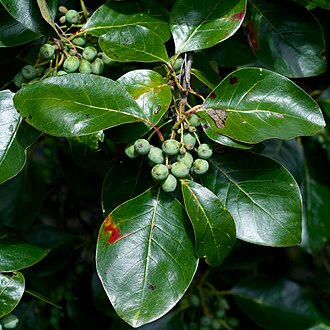
Also known as: Black Tupelo
Black gum turns before almost anything else in the eastern woods, and the color is a fluorescent scarlet on leaves glossy enough to look wet. Its branches leave the trunk at nearly right angles, giving even young trees an unmistakable tiered silhouette once bare. The flowers are small and easy to miss but pour out nectar, and the genus is the source of tupelo honey. Fruit ripens blue-black in early fall, a season behind the bloom, and is stripped fast by thrushes and other migrants. The thin pulp is sharply acid but pleasant to eat out of hand, and it is also used in preserves. Old trees hollow from the center and are among the longest-lived hardwoods in the East, some past four centuries.
- Family
- Nyssaceae
- Type
- tree
- Lifespan
- perennial
- Height
- 30–50 ft
- Spacing
- 20–30 ft apart
- Light
- sun, part shade, shade
- Soil moisture
- moist
- Soil pH
- acidic
- Bloom
- April, May, June
- Bloom colors
- white, green, brown
- Wildlife value
- pollinators, mammals, songbirds, larval host
- Caterpillar hosts
- ~26 butterfly & moth species
- Landscape uses
- naturalizing, rain garden
- Native states
- AL, AR, CT, DC, DE, FL, GA, IL, IN, KS, KY, LA, MA, MD, ME, MI, MO, MS, NC, NH, NJ, NY, OH, OK, PA, RI, SC, TN, TX, VA, VT, WI, WV