Western Wheatgrass
Pascopyrum smithii
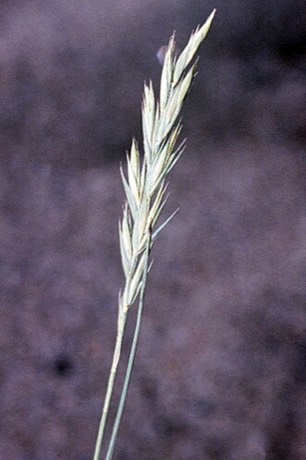
Western wheatgrass is the grass that holds gumbo: it runs hard by rhizomes through the heavy, alkaline, shrink-swell clay of the northern plains where few other grasses will root at all, and it is the standard choice for reclaiming a clay cut or a saline seep. Its foliage is a distinct waxy blue-green, stiff and upright, and the leaves are strongly ridged on the upper surface — the quickest way to separate it from the other wheatgrasses. It is cool-season, making most of its growth in spring and fall and going semi-dormant in midsummer heat, which is why it cures on the stem and holds protein into winter as standing forage. That rhizomatous habit makes it excellent for erosion control and a poor neighbor in a small planting; give it a bank or a field. It is a larval host for skippers, and its seed feeds longspurs and sparrows across the open plains. It tolerates both drought and periodic flooding, an unusual pairing that suits a landscape which swings between the two.
- Family
- Poaceae
- Type
- grass
- Lifespan
- perennial
- Height
- 3–3 ft
- Spacing
- 1–2 ft apart
- Light
- sun, part shade
- Soil moisture
- dry, moist
- Soil pH
- acidic, neutral, alkaline
- Bloom
- May, June
- Bloom colors
- yellow
- Wildlife value
- songbirds, larval host
- Landscape uses
- specimen, border, erosion control, naturalizing
- Native states
- AK, AR, AZ, CA, CO, GA, IA, ID, KS, MA, MN, MO, MT, ND, NE, NH, NM, NV, NY, OH, OK, OR, SD, TN, TX, UT, WA, WI, WY