Turkey Oak
Quercus laevis
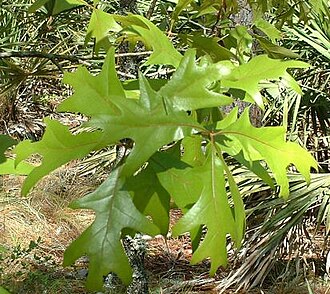
Turkey oak is the characteristic oak of Southeastern sandhills, with large, three-lobed leaves that turn red in fall and twist to face the sun. Thrives on the driest, deepest sands alongside longleaf pine. Its acorns are traditional food once the bitter tannins are leached out and the seed ground into flour.
- Family
- Fagaceae
- Type
- tree
- Lifespan
- perennial
- Height
- 40–40 ft
- Spacing
- 20–35 ft apart
- Light
- sun, part shade
- Soil moisture
- moist
- Soil pH
- acidic
- Bloom
- March, April, May
- Bloom colors
- yellow
- Wildlife value
- butterflies, pollinators, mammals, songbirds, larval host
- Caterpillar hosts
- ~557 butterfly & moth species
- Landscape uses
- specimen
- Native states
- AL, FL, GA, LA, MS, NC, SC, VA
Related native plants
More Quercus species
- Pin Oak (Quercus palustris)
- Northern Red Oak (Quercus rubra)
- White Oak (Quercus alba)
- Coast Live Oak (Quercus agrifolia)
- Willow Oak (Quercus phellos)
- Bur Oak (Quercus macrocarpa)