Highbush Blueberry
Vaccinium corymbosum
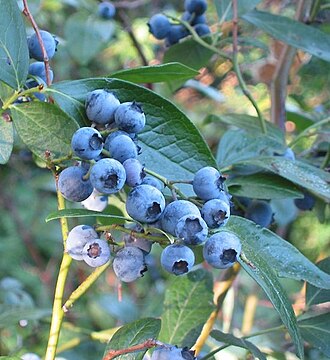
Highbush blueberry is the wild parent of nearly every cultivated blueberry, and the species itself bears the same fruit at a smaller size and often better flavor. It insists on genuinely acidic soil, pH 4.5 to 5.5, and its shallow roots resent drought and standing water alike — most failures are a soil chemistry problem rather than a care problem, so test the bed before planting rather than after. Urn-shaped flowers hang in clusters in spring and are worked by bumblebees, which buzz-pollinate them far more effectively than honeybees can; two or more different plants set noticeably heavier crops than one alone. Fruit ripens over several weeks in summer and is best left on the bush to the last minute, since it will not sweeten after picking. It feeds a very large number of native caterpillar species, which is much of why a blueberry patch is full of nesting birds. Fall color is a clean scarlet and the young twigs stay red all winter.
- Family
- Ericaceae
- Type
- shrub
- Lifespan
- perennial
- Height
- 6–12 ft
- Spacing
- 8–12 ft apart
- Light
- sun, part shade, shade
- Soil moisture
- dry, moist, wet
- Soil pH
- acidic, neutral
- Bloom
- May, June
- Bloom colors
- white, pink
- Wildlife value
- pollinators, butterflies, songbirds, larval host
- Caterpillar hosts
- ~294 butterfly & moth species
- Landscape uses
- rain garden
- Native states
- AL, AR, CT, DC, DE, GA, IL, IN, KY, LA, MA, MD, ME, MI, MS, NC, NH, NJ, NY, OH, OK, PA, RI, SC, TN, TX, VA, VT, WI, WV
Related native plants
More Vaccinium species
- Evergreen Huckleberry (Vaccinium ovatum)
- Red Huckleberry (Vaccinium parvifolium)
- Sparkleberry (Vaccinium arboreum)
- Deerberry (Vaccinium stamineum)
- Lowbush Blueberry (Vaccinium angustifolium)
- Lingonberry (Vaccinium vitis-idaea)