Netted Chain Fern
Woodwardia areolata
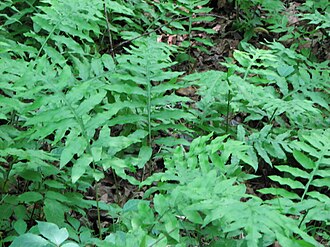
Netted chain fern spreads by wiry dark rhizomes through wet, acidic ground, so its fronds come up singly at intervals in loose open colonies rather than in the tight vase of a clump-former. It is regularly mistaken for sensitive fern; this one has glossier, narrower, more finely toothed fronds, and the net of veins that gives it its name shows clearly when a frond is held up to the light. The fertile fronds are something else entirely — stiff, narrow, dark brown structures that stand up through winter after the green fronds have collapsed, and they are what the chain in the name refers to, the spore cases arranged end to end along the veins. It needs consistently wet, acidic soil in shade and will not tolerate lime or a bed that dries out. Deer largely ignore it, as they do most ferns, which makes it useful in woodland where hostas fail.
- Family
- Blechnaceae
- Type
- fern
- Lifespan
- perennial
- Height
- 1.5–2 ft
- Spacing
- 1–1.5 ft apart
- Light
- part shade, shade
- Soil moisture
- moist, wet
- Soil pH
- acidic, alkaline
- Wildlife value
- mammals, songbirds
- Landscape uses
- border
- Native states
- AL, AR, CT, DC, DE, FL, GA, IL, IN, KS, KY, LA, MA, MD, ME, MI, MO, MS, NC, NH, NJ, NY, OH, OK, PA, RI, SC, TN, TX, VA, WV