Pacific Crabapple
Malus fusca
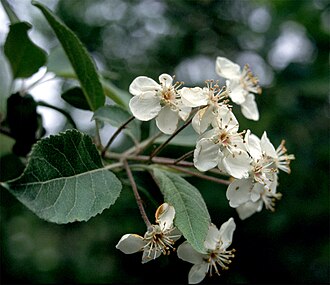
Pacific crabapple, the only crabapple native to the West Coast, thrives in wet thickets and stream edges from California to Alaska. Fragrant white bloom yields tiny tart apples long harvested by coastal peoples. The tart little apples are a traditional food raw, cooked, or made into jelly — best after a few autumn frosts have sweetened them. As with other apples, the seeds contain trace cyanogenic compounds and shouldn't be eaten in quantity.
- Family
- Rosaceae
- Type
- tree
- Lifespan
- perennial
- Height
- 15–15 ft
- Spacing
- 15–25 ft apart
- Light
- sun
- Soil moisture
- moist
- Soil pH
- acidic, neutral, alkaline
- Bloom
- April, May
- Bloom colors
- white, pink
- Wildlife value
- pollinators, songbirds, butterflies, larval host, mammals
- Caterpillar hosts
- ~308 butterfly & moth species
- Landscape uses
- specimen, hedge or screen, erosion control
- Native states
- AK, CA, OR, WA
Related native plants
More Malus species
- Sweet Crabapple (Malus coronaria)
- Southern Crabapple (Malus angustifolia)
- Prairie Crabapple (Malus ioensis)