Gray-headed Coneflower
Ratibida pinnata
Also known as: Yellow Coneflower, Prairie Coneflower
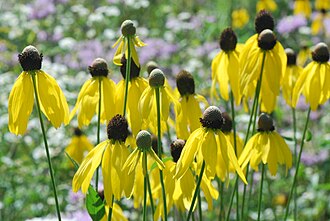
Gray-headed coneflower sweeps its yellow rays sharply backward from a tall gray-brown cone, so a stand in wind reads as a scatter of small shuttlecocks on wiry stems. Crush the cone and it smells distinctly of anise, the quickest field check against the other prairie yellow daisies. It is a foundation species of tallgrass prairie and among the first forbs to return on a restoration, flowering in its second or third year from seed where slower species take five. The cone darkens nearly to black as the seed ripens and goldfinches take it apart through fall, so leave the stems standing. It handles drought, clay and full sun without staking, though in richer ground it leans and does better planted through grasses that hold it up.
- Family
- Asteraceae
- Type
- wildflower
- Lifespan
- perennial
- Height
- 3–5 ft
- Spacing
- 1.5–2 ft apart
- Light
- sun, part shade
- Soil moisture
- dry
- Soil pH
- acidic, neutral
- Bloom
- May, June, July, August, September
- Bloom colors
- yellow
- Wildlife value
- pollinators, butterflies, songbirds
- Landscape uses
- border, naturalizing, rain garden
- Native states
- AL, AR, CT, FL, GA, IA, IL, IN, KS, KY, LA, MA, MI, MN, MO, MS, NE, OH, OK, PA, SC, SD, TN, WI