American Elderberry
Sambucus canadensis
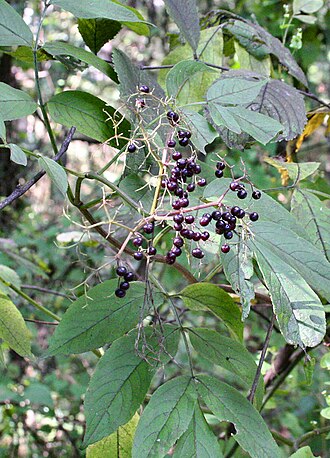
Flat creamy flower umbels the size of dinner plates open in early summer, followed by heavy clusters of purple-black berries that birds strip within days. Fast, forgiving, and happiest in moist ground at a woodland edge. Cook the fruit for syrup, jelly or wine — the leaves and stems are poisonous, and unripe berries carry a toxic alkaloid.
- Family
- Viburnaceae
- Type
- tree
- Lifespan
- perennial
- Height
- 5–12 ft
- Spacing
- 5–12 ft apart
- Light
- sun, part shade
- Soil moisture
- moist
- Soil pH
- acidic, neutral, alkaline
- Bloom
- June, July
- Bloom colors
- white
- Wildlife value
- butterflies, hummingbirds, pollinators, mammals, songbirds, larval host
- Caterpillar hosts
- ~42 butterfly & moth species
- Landscape uses
- naturalizing, rain garden
- Native states
- AL, AR, AZ, CA, CT, DC, DE, FL, GA, HI, IA, IL, IN, KS, KY, LA, MA, MD, ME, MI, MN, MO, MS, MT, NC, ND, NE, NH, NJ, NM, NY, OH, OK, PA, RI, SC, SD, TN, TX, VA, VT, WI, WV, WY