Blue Elderberry
Sambucus cerulea
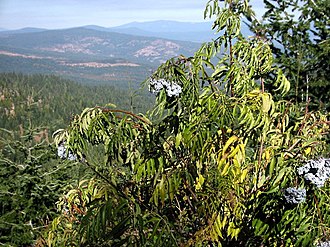
Fast, adaptable western elderberry with flat creamy flower clusters and powder-blue berries for pies, syrup, and birds. A wildlife magnet from creekside to dry slope. Cook the fruit: the leaves, stems, and unripe berries are poisonous, and even ripe raw fruit upsets some stomachs.
- Family
- Viburnaceae
- Type
- tree
- Lifespan
- perennial
- Height
- 23–23 ft
- Spacing
- 10–20 ft apart
- Light
- sun, part shade
- Soil moisture
- dry, moist
- Soil pH
- acidic, neutral
- Bloom
- May, June, July
- Bloom colors
- white
- Wildlife value
- pollinators, songbirds, mammals, larval host
- Caterpillar hosts
- ~42 butterfly & moth species
- Landscape uses
- specimen, hedge or screen
- Native states
- AZ, CA, CO, ID, MT, NM, NV, OK, OR, TX, UT, WA, WY