Common Snowberry
Symphoricarpos albus
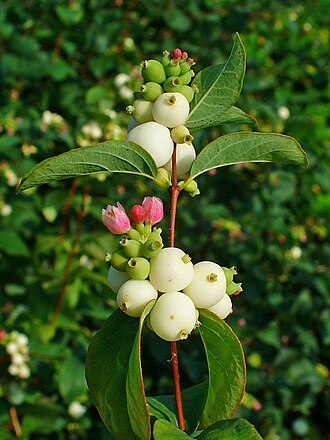
A tough, suckering shrub with tiny pink bell flowers followed by clusters of waxy white berries that persist into winter. Thrives in sun or shade, wet or dry, holding difficult banks. The white berries are mildly toxic and are not for eating.
- Family
- Caprifoliaceae
- Type
- shrub
- Lifespan
- perennial
- Height
- 3–6 ft
- Spacing
- 3–6 ft apart
- Light
- sun, part shade, shade
- Soil moisture
- dry, moist
- Soil pH
- acidic, neutral, alkaline
- Bloom
- June, July
- Bloom colors
- white, pink
- Wildlife value
- pollinators, butterflies, mammals, songbirds, larval host
- Caterpillar hosts
- ~25 butterfly & moth species
- Landscape uses
- border, rain garden
- Native states
- AK, CA, CO, CT, DC, IA, ID, IL, KY, MA, MD, MI, MN, MO, MT, NC, ND, NE, NH, NJ, NM, NY, OH, OR, PA, SD, TN, UT, VA, VT, WA, WI, WV, WY
Related native plants
More Symphoricarpos species
- Coralberry (Symphoricarpos orbiculatus)
- Western Snowberry (Symphoricarpos occidentalis)
- Creeping Snowberry (Symphoricarpos mollis)
- Desert Snowberry (Symphoricarpos longiflorus)
- Mountain Snowberry (Symphoricarpos oreophilus)