Bitternut Hickory
Carya cordiformis
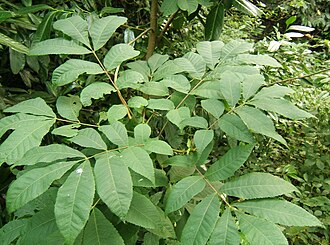
Distinctive bright yellow winter buds. Tolerates wetter sites than most hickories. The nut is edible but so bitter and astringent that even squirrels tend to pass it over — a marginal food at best among the hickories.
- Family
- Juglandaceae
- Type
- tree
- Lifespan
- perennial
- Height
- 50–80 ft
- Spacing
- 30–50 ft apart
- Light
- sun, part shade, shade
- Soil moisture
- moist
- Soil pH
- acidic, neutral
- Bloom
- April
- Bloom colors
- yellow, green, brown
- Wildlife value
- songbirds, butterflies, larval host
- Caterpillar hosts
- ~235 butterfly & moth species
- Landscape uses
- specimen
- Native states
- AL, AR, CT, DC, DE, FL, GA, IA, IL, IN, KS, KY, LA, MA, MD, ME, MI, MN, MO, MS, NC, NE, NH, NJ, NY, OH, OK, PA, RI, SC, TN, TX, VA, VT, WI, WV
Related native plants
More Carya species
- Shagbark Hickory (Carya ovata)
- Pecan (Carya illinoinensis)
- Pignut Hickory (Carya glabra)
- Mockernut Hickory (Carya tomentosa)
- Black Hickory (Carya texana)
- Water Hickory (Carya aquatica)