Black Walnut
Juglans nigra
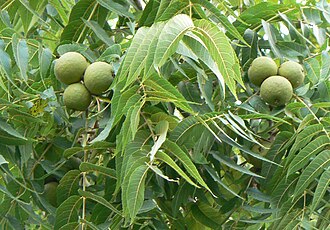
The nuts are richly flavored and worth the considerable work of husking and cracking, and the timber is among the most valuable hardwoods in North America. Its roots exude juglone, which suppresses tomatoes, apples, blueberries and many perennials within the root zone — site it far from the vegetable garden. Handling the husks stains skin for days and occasionally causes dermatitis.
- Family
- Juglandaceae
- Type
- tree
- Lifespan
- perennial
- Height
- 75–100 ft
- Spacing
- 75–100 ft apart
- Light
- sun, part shade
- Soil moisture
- moist
- Soil pH
- acidic, neutral, alkaline
- Bloom
- April, May
- Bloom colors
- yellow, green, brown
- Wildlife value
- songbirds, butterflies, larval host
- Caterpillar hosts
- ~129 butterfly & moth species
- Landscape uses
- specimen
- Native states
- AL, AR, CT, DC, DE, FL, GA, IA, IL, IN, KS, KY, LA, MD, MI, MN, MO, MS, NC, NE, NJ, NY, OH, OK, PA, SC, SD, TN, TX, VA, WI, WV
Related native plants
More Juglans species
- Southern California Walnut (Juglans californica)
- Butternut (Juglans cinerea)
- Arizona Walnut (Juglans major)
- Little Walnut (Juglans microcarpa)